Juris Astro
Juris Brokāns

Vedic astrology

Explore the planets, lunar nodes and 27 nakshatras. Start with what interests you in your birth chart.

The nine grahas

Vedic astrology uses nine grahas. These are the Sun, the Moon, the five planets visible to the naked eye, and the two lunar nodes. Choose a graha to explore its meaning in a birth chart.

Layout
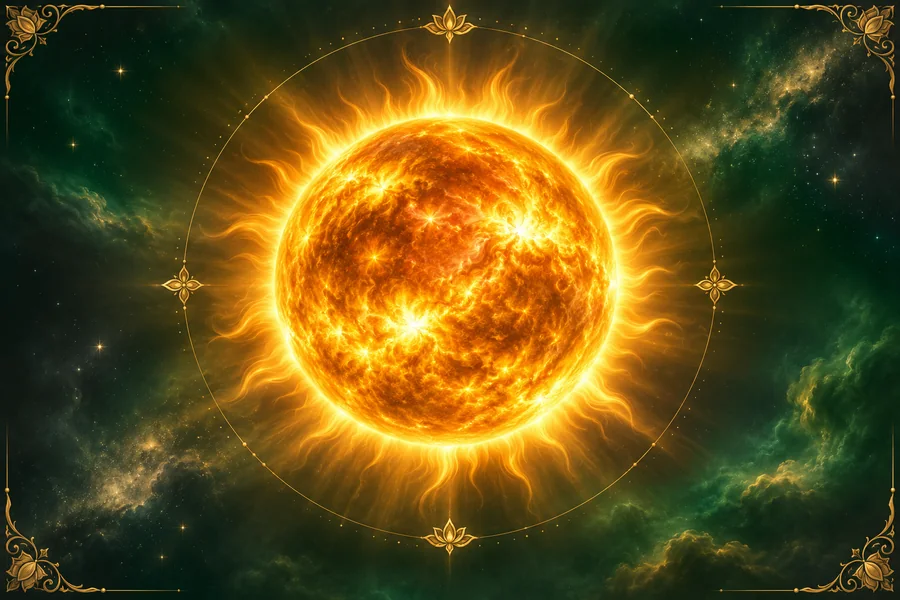
Self-respect and leadershipIn Vedic astrology the Sun represents self-respect and the willingness to take responsibility for a choice.

In Vedic astrology the Sun represents self-respect and the willingness to take responsibility for a choice.

In a birth chart

The Sun is associated with self-respect, a father or another role model, and the way a person relates to authority. Its house gives context to a question about where you want to set your own direction.

In everyday life

When a group looks to you for direction, the Sun’s symbolism comes into focus. Leading means making a decision, explaining it and listening when someone disagrees.

A moment to reflect

Which decision are you proud of even when it goes unnoticed?

Traditional gem
Ruby
Traditional name
Surya
Sanskrit (IAST)
Sūrya
In astronomy
Star
Signs ruled
Leo
Weekday
Sunday
SDO · AIA 171 Å

Space observation

The Sun in extreme ultraviolet light. Bright loops trace hot plasma above active regions. Colour is assigned in processing.

The Sun in extreme ultraviolet light. Bright loops trace hot plasma above active regions. Colour is assigned in processing.

Latest available frame. The image itself is stamped with the observation time (UTC).
Image credits

NASA/SDO · AIA, EVE & HMI science teams

NASA · SDO

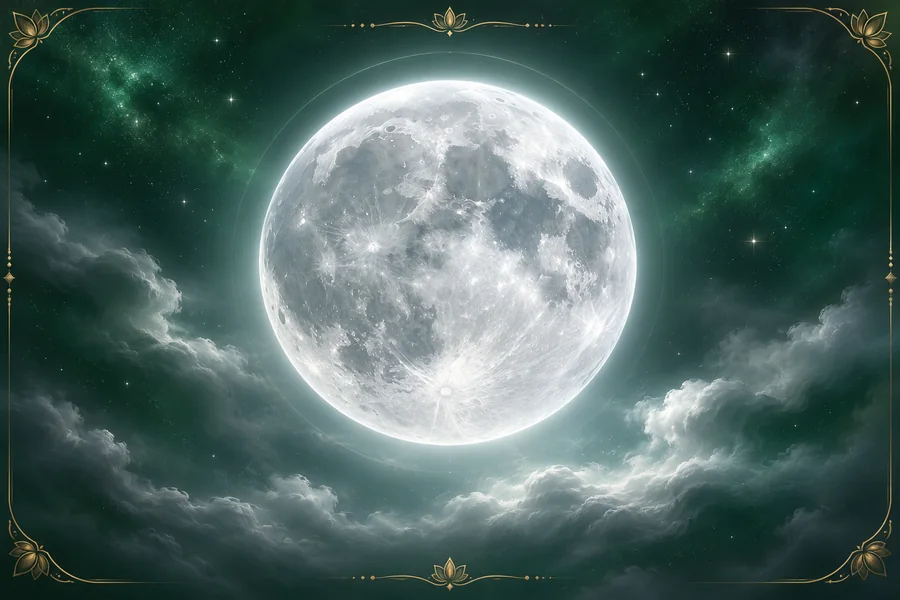
Feelings and belongingThe Moon represents feelings, familiar habits and the things that make a place feel like home.

The Moon represents feelings, familiar habits and the things that make a place feel like home.

In a birth chart

The Moon is associated with the mind, memory and the experience of giving and receiving care. The Moon sign and the birth nakshatra come from the same position at birth, using two different divisions of the zodiac.

In everyday life

After a demanding day you might want company, a quiet room or a familiar meal. These ordinary preferences offer a way to explore the Moon’s meaning.

A moment to reflect

What helps you settle after a day that has asked too much of you?

Traditional gem
Pearl

Related nakshatras

Traditional name
Chandra
Sanskrit (IAST)
Candra
In astronomy
Earth’s natural satellite
Signs ruled
Cancer
Weekday
Monday
Artemis II

Space observation

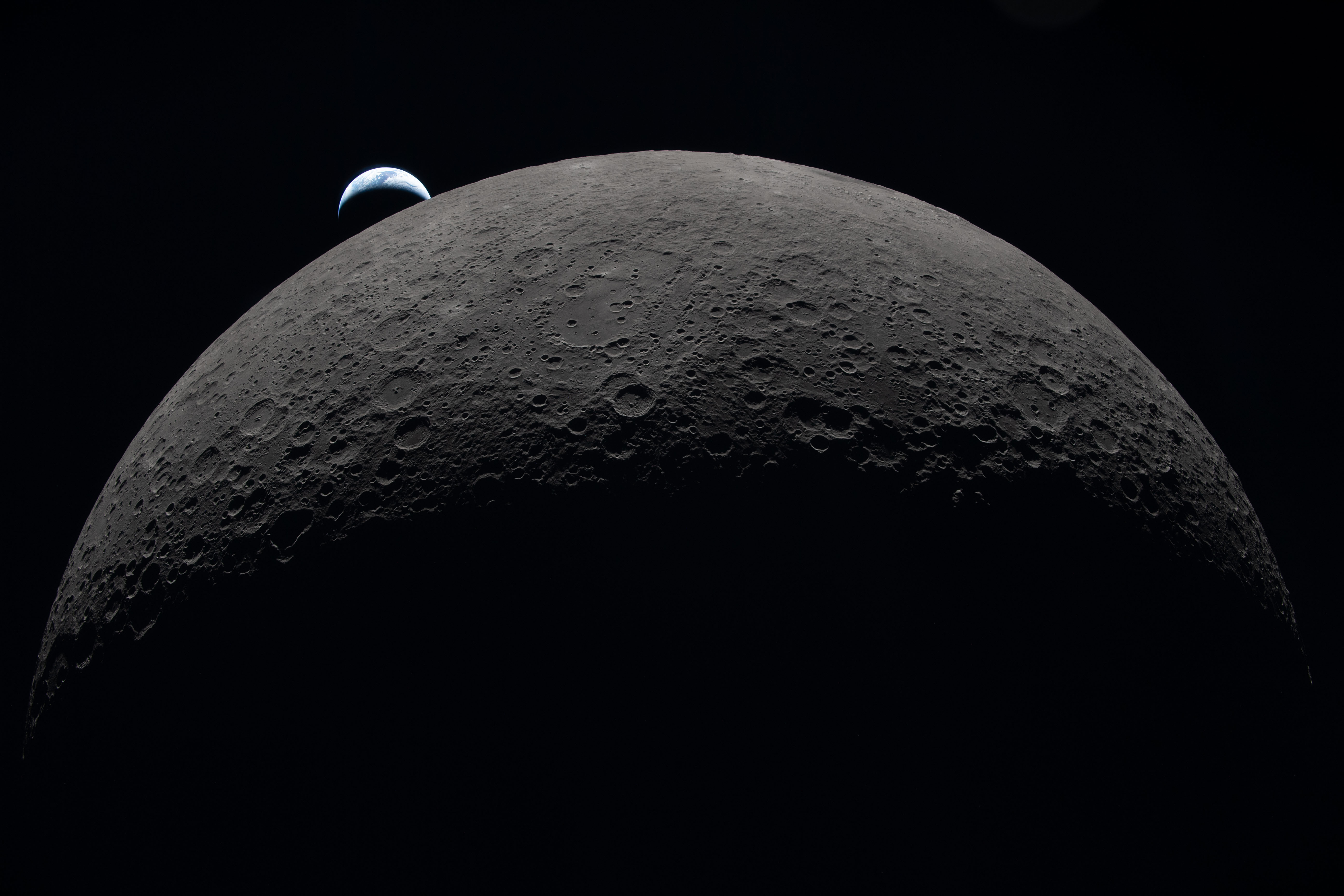
A crescent Earth sets behind the Moon’s cratered horizon, seen from the Orion spacecraft.

A crescent Earth sets behind the Moon’s cratered horizon, seen from the Orion spacecraft.

Observed · 6 April 2026Published · 9 April 2026
Image credits

NASA · Artemis II crew

Saturn and Sade Sati
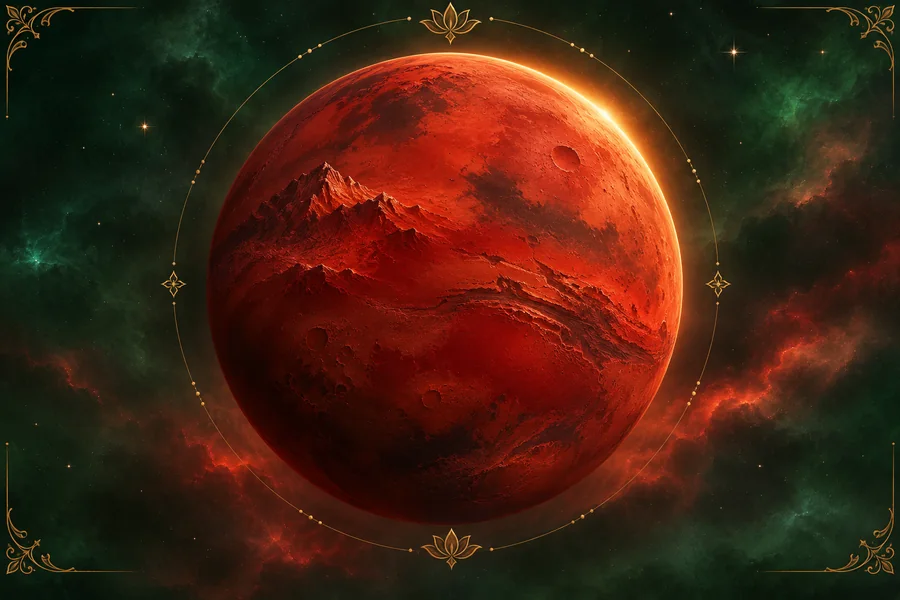
Courage and actionMars represents the impulse to take the first step and defend what matters to you.

Mars represents the impulse to take the first step and defend what matters to you.

In a birth chart

Mars is read in questions of initiative, competition and personal boundaries. The house places these themes in a part of life. At work, courage might mean taking on a task everyone has put off.

In everyday life

If new duties keep landing on your desk, asking to revisit your workload gives that energy a direction. It takes courage to start the conversation early.

A moment to reflect

Where would one practical step help you right now?

Traditional gem
Red coral

Related nakshatras

Traditional name
Mangala
Sanskrit (IAST)
Maṅgala
In astronomy
Terrestrial planet
Signs ruled
Aries, Scorpio
Weekday
Tuesday
Curiosity · Navcam

Space observation

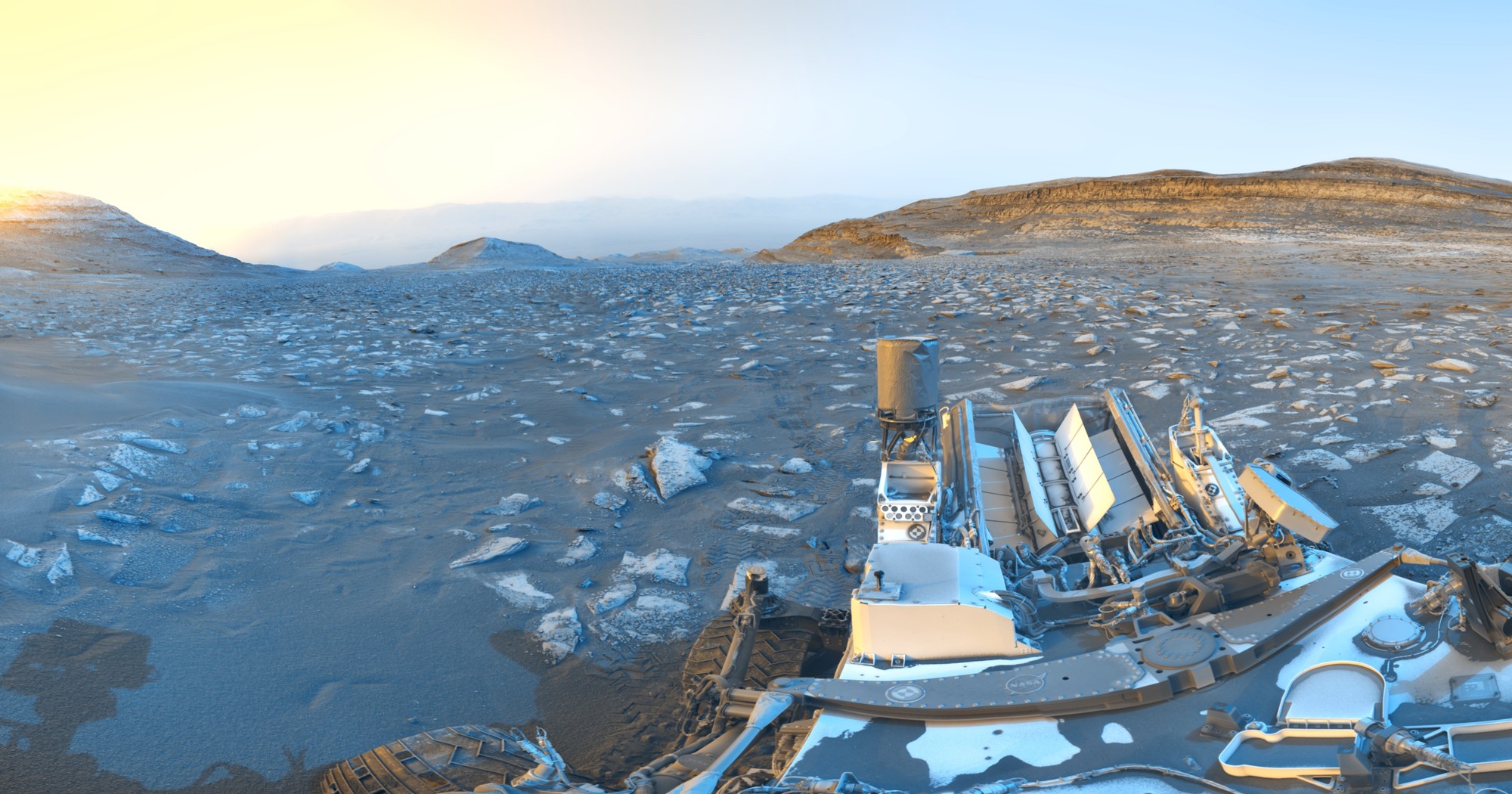
One Martian landscape at two times of day. Two monochrome panoramas were combined, with blue assigned to morning and yellow to afternoon.

One Martian landscape at two times of day. Two monochrome panoramas were combined, with blue assigned to morning and yellow to afternoon.

Observed · 30 August 2026 – 2 September 2026Published · 16 September 2026
Image credits

NASA/JPL-Caltech

Language and curiosityMercury represents the ability to ask questions, compare ideas and find the right words.

Mercury represents the ability to ask questions, compare ideas and find the right words.

In a birth chart

Mercury is associated with language, calculation, learning and trade. Reading its position can give a focus to questions about how someone organises information and explains an idea to another person.

In everyday life

Two people can leave a meeting with different ideas of what they agreed. A simple question about who will do what, and by when, can clear it up.

A moment to reflect

What could you ask before drawing a conclusion?

Traditional gem
Emerald

Related nakshatras

Traditional name
Budha
Sanskrit (IAST)
Budha
In astronomy
Terrestrial planet
Signs ruled
Gemini, Virgo
Weekday
Wednesday
BepiColombo · M-CAM 1

Space observation

Sunlit craters in Mercury’s northern hemisphere, with parts of the spacecraft in the foreground.

Sunlit craters in Mercury’s northern hemisphere, with parts of the spacecraft in the foreground.

Observed · 8 January 2025Published · 9 January 2025
Image credits

ESA/BepiColombo/MTM

CC BY-SA 3.0 IGO

NASA mission page

Wisdom and learningJupiter represents wisdom, trust and the ability to find meaning in experience.

Jupiter represents wisdom, trust and the ability to find meaning in experience.

In a birth chart

Guru, one of Jupiter’s names, means teacher. Jupiter is associated with mentors, knowledge, values and counsel. Its house offers a context for exploring where you look for meaning or pass on what you have learned.

In everyday life

A good teacher sometimes leaves you with a question to work through yourself. Later you may find yourself doing the same for someone else.

A moment to reflect

Whose advice has changed the way you see something?

Traditional gem
Yellow sapphire
Traditional name
Guru
Sanskrit (IAST)
Guru
In astronomy
Gas giant
Signs ruled
Sagittarius, Pisces
Weekday
Thursday
Juno · JunoCam

Space observation

Swirling clouds in Jupiter’s northern hemisphere. Enhanced colours bring out the structure of the storms.

Swirling clouds in Jupiter’s northern hemisphere. Enhanced colours bring out the structure of the storms.

Observed · 12 May 2024Published · 4 June 2026
Image credits

NASA/JPL-Caltech/SwRI/MSSS · Gary Eason (CC BY)

Partner’s original

Closeness and beautyVenus represents affection, taste and the ways we show someone they matter.

Venus represents affection, taste and the ways we show someone they matter.

In a birth chart

Venus is associated with relationships, pleasure, taste and the arts. In a chart it can prompt two questions. What draws a person in, and how do they show affection in return?

In everyday life

Remembering someone’s favourite song and making an unhurried dinner together are two different ways of expressing affection.

A moment to reflect

How do you let someone know you care in everyday life?

Traditional gem
Diamond
Traditional name
Shukra
Sanskrit (IAST)
Śukra
In astronomy
Terrestrial planet
Signs ruled
Taurus, Libra
Weekday
Friday
Parker Solar Probe · WISPR

Space observation

The nightside of Venus. The camera picked up light from the hot surface through the cloud cover.

The nightside of Venus. The camera picked up light from the hot surface through the cloud cover.

Observed · February 2021
Image credits

NASA/APL/NRL

Time and responsibilitySaturn represents time, boundaries and work whose results take a while to show.

Saturn represents time, boundaries and work whose results take a while to show.

In a birth chart

Saturn is associated with time, duties, limits and patience. Its natal position and its current transit offer two different perspectives. In the Sade Sati tradition the transit is read in relation to the natal Moon sign.

In everyday life

When you learn a language, ten minutes of conversation each day can be more useful than an occasional burst of enthusiasm. Saturn’s symbolism draws attention to that rhythm.

A moment to reflect

Which small habit would you like to make time for again next week?

Traditional gem
Blue sapphire
Traditional name
Shani
Sanskrit (IAST)
Śani
In astronomy
Gas giant
Signs ruled
Capricorn, Aquarius
Weekday
Saturday
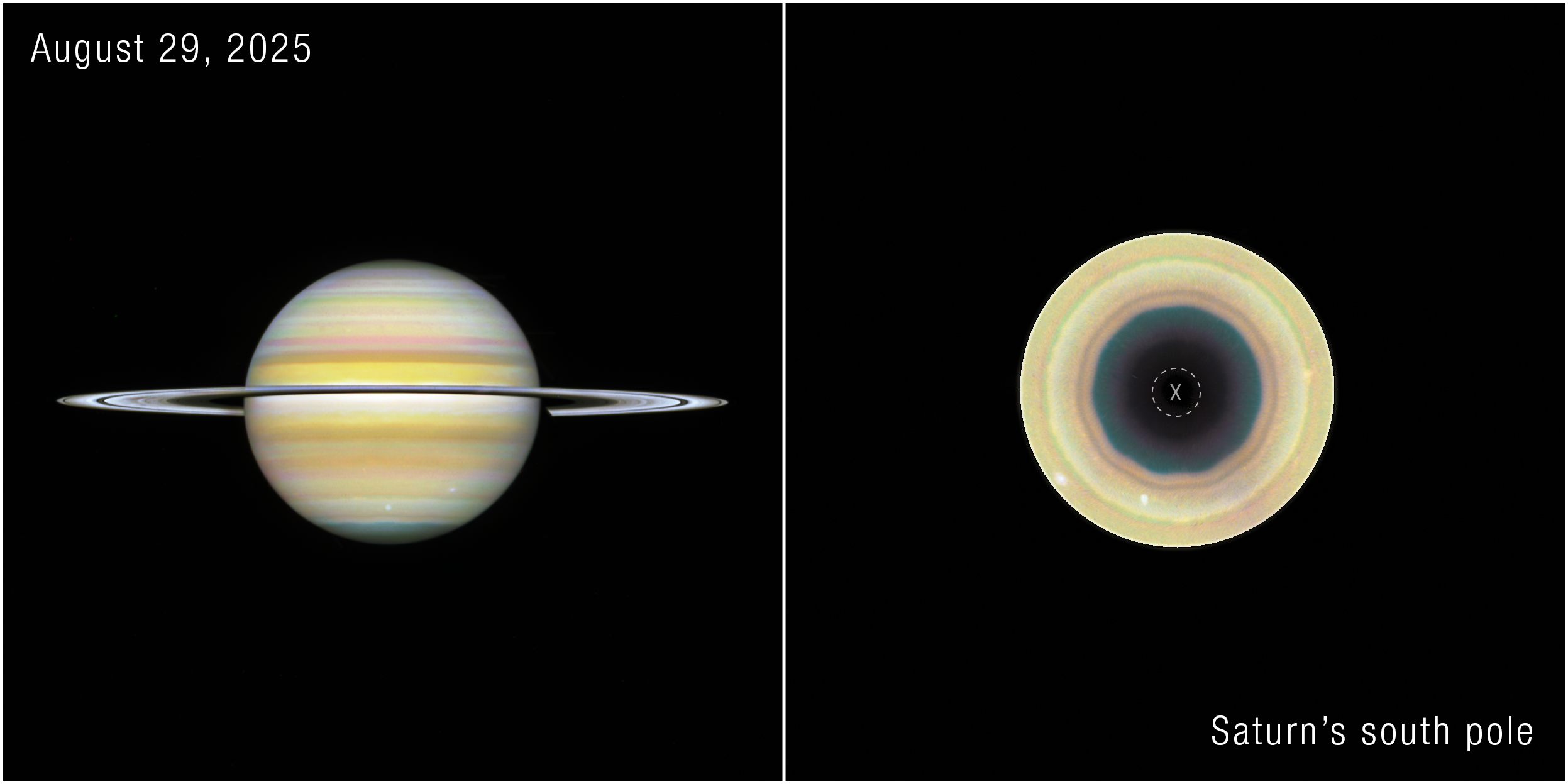
Hubble

Space observation

Saturn and its rings appear on the left. The south polar view on the right reveals a ten-sided pattern in the atmosphere.

Saturn and its rings appear on the left. The south polar view on the right reveals a ten-sided pattern in the atmosphere.

Observed · 29 August 2025Published · 2 September 2026
Image credits

NASA, ESA, STScI, Agustin Sánchez-Lavega (UPV), Amy Simon (NASA-GSFC), Michael Wong (UC Berkeley) · Alyssa Pagan

Saturn and Sade Sati
Desire and discoveryRahu is the ascending lunar node. In Vedic astrology it symbolises the pull of the unfamiliar.

Rahu is the ascending lunar node. In Vedic astrology it symbolises the pull of the unfamiliar.

In a birth chart

Rahu is read together with Ketu. Rahu’s side of the axis is traditionally associated with a strong appetite for new experiences, a wider reach or recognition. The houses of the two nodes give these themes a setting.

In everyday life

An exciting offer might lead you to learn something entirely new. Before accepting, it can help to ask what an ordinary working day would look like.

A moment to reflect

What still appeals to you once the first rush of excitement has passed?

Traditional gem
Hessonite garnet

Related nakshatras

Traditional name
Rahu
Sanskrit (IAST)
Rāhu
In astronomy
Ascending lunar node
Crossing the ecliptic
The Moon crosses the ecliptic from south to north.

This lunar node marks where the Moon’s path across the sky crosses the ecliptic. The card shows its traditional symbol. NASA on the Moon’s orbit

Experience and letting goKetu is the descending lunar node. It represents inward enquiry and the ability to let go.

Ketu is the descending lunar node. It represents inward enquiry and the ability to let go.

In a birth chart

Ketu always lies opposite Rahu. Vedic readings associate it with detachment from recognition, familiar skills and an interest in spiritual life. Its house gives a setting for exploring these themes.

In everyday life

You may still be good at a task and yet feel ready to spend less of your life doing it. That is one way to understand Ketu’s theme.

A moment to reflect

What could you set aside to make time for something you care about?

Related nakshatras

Traditional name
Ketu
Sanskrit (IAST)
Ketu
In astronomy
Descending lunar node
Crossing the ecliptic
The Moon crosses the ecliptic from north to south.

This lunar node marks where the Moon’s path across the sky crosses the ecliptic. The card shows its traditional symbol. NASA on the Moon’s orbit

Select a graha to open its description.

The nine grahas
GrahaMain themeTraditional gem
Sun

In Vedic astrology the Sun represents self-respect and the willingness to take responsibility for a choice.

Open description

Self-respect and leadershipRuby
Moon

The Moon represents feelings, familiar habits and the things that make a place feel like home.

Open description

Feelings and belongingPearl
Mars

Mars represents the impulse to take the first step and defend what matters to you.

Open description

Courage and actionRed coral
Mercury

Mercury represents the ability to ask questions, compare ideas and find the right words.

Open description

Language and curiosityEmerald
Jupiter

Jupiter represents wisdom, trust and the ability to find meaning in experience.

Open description

Wisdom and learningYellow sapphire
Venus

Venus represents affection, taste and the ways we show someone they matter.

Open description

Closeness and beautyDiamond
Saturn

Saturn represents time, boundaries and work whose results take a while to show.

Open description

Time and responsibilityBlue sapphire
Rahu

Rahu is the ascending lunar node. In Vedic astrology it symbolises the pull of the unfamiliar.

Open description

Desire and discoveryHessonite garnet
Ketu

Ketu is the descending lunar node. It represents inward enquiry and the ability to let go.

Open description

Experience and letting goCat’s-eye chrysoberyl
In modern astrologyUranus, Neptune and Pluto

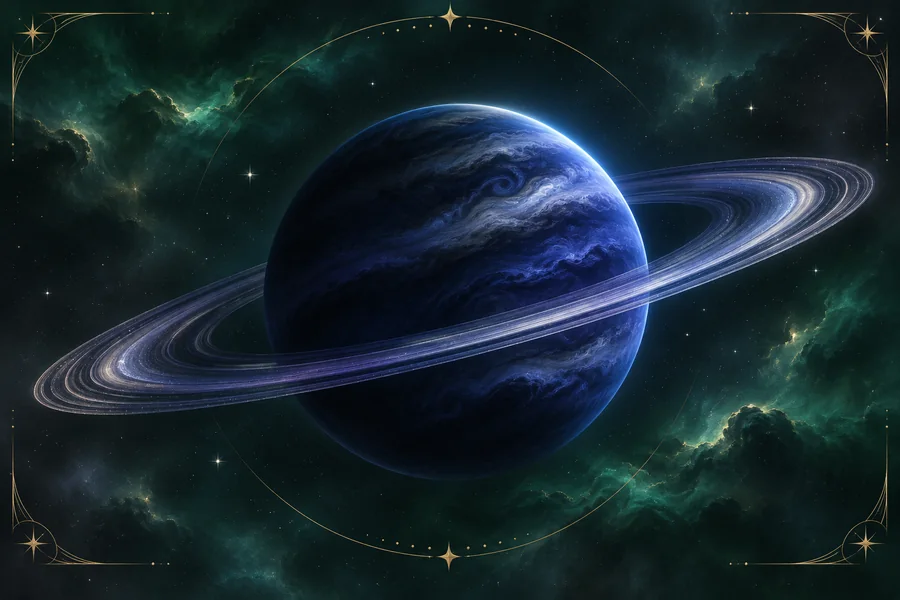
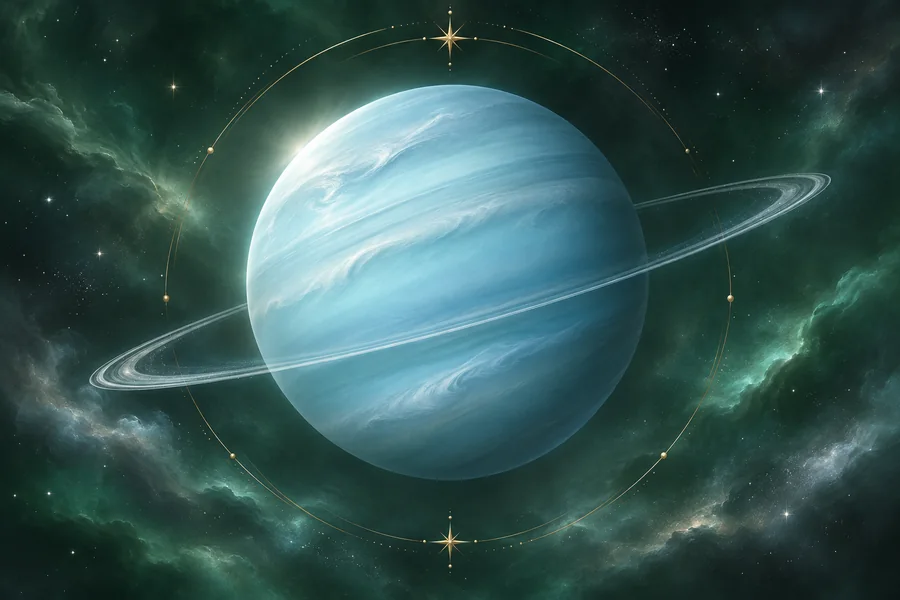
Uranus and Neptune are ice giants, and Pluto is a dwarf planet. Their symbolism features in modern astrology. Classical Vedic astrology uses the nine grahas above.

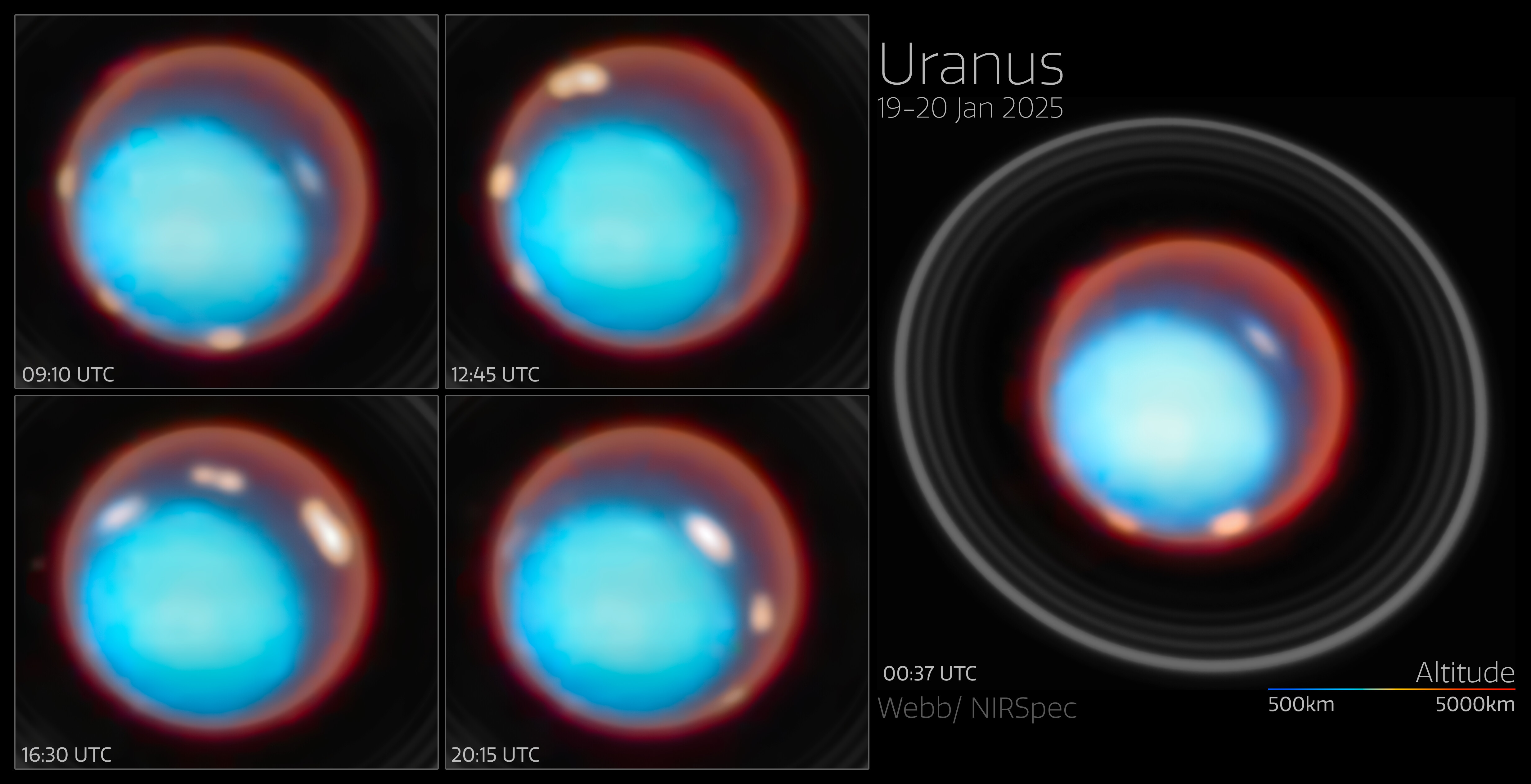
Uranus

In modern astrology Uranus represents independence and a sudden change of perspective. Its theme appears when a new idea replaces a familiar solution.

Webb · NIRSpec

Space observation

Infrared observations of Uranus’s upper atmosphere. The sequence follows its auroral bands as the planet rotates.

Infrared observations of Uranus’s upper atmosphere. The sequence follows its auroral bands as the planet rotates.

Observed · January 2025Published · 19 February 2026
Image credits

ESA/Webb, NASA, CSA, STScI, P. Tiranti, H. Melin, M. Zamani (ESA/Webb)

CC BY 4.0

Partner’s original

Neptune

Neptune is associated with imagination, dreams and compassion. Its symbolism invites you to consider which details you have observed and which your imagination has supplied.

Hubble + Webb

Space observation

Hubble’s view of Neptune appears on the left. On the right, Webb’s infrared data are overlaid, with auroral regions shown in cyan.

Hubble’s view of Neptune appears on the left. On the right, Webb’s infrared data are overlaid, with auroral regions shown in cyan.

Observed · 21 June 2023 – 22 June 2023Published · 26 March 2025
Image credits

NASA, ESA, CSA, STScI, Heidi Hammel (AURA), Henrik Melin (Northumbria University), Leigh Fletcher (University of Leicester), Stefanie Milam (NASA-GSFC) · Alyssa Pagan (STScI)

Pluto

Astrologers associate Pluto with power and deep change. A shift in family responsibilities, for instance, may also change who makes the decisions.

New Horizons · MVIC

Space observation

A bright, heart-shaped region on Pluto. The flyby data were processed to approximate the colours a human eye would see.

A bright, heart-shaped region on Pluto. The flyby data were processed to approximate the colours a human eye would see.

Observed · 14 July 2015Published · 23 July 2018
Image credits

NASA/Johns Hopkins University Applied Physics Laboratory/Southwest Research Institute/Alex Parker

The 27 nakshatras

Your birth nakshatra is the part of the sidereal zodiac occupied by the Moon at your birth. The zodiac is divided into 27 equal nakshatras of 13°20′ each. Each has four quarters, called padas, of 3°20′ apiece.

Results 27 / 27

01AshwiniKetu

The twin horsemen of the Ashwini story are known for coming to someone’s aid. Think of the person who notices a need and is already on their feet while others are still discussing it.

A traditional symbol
Horse’s head
Latvian
Ašvini
English
Ashwini
Russian
Ашвини
Sanskrit (IAST)
Aśvinī
Ruling graha
Ketu
Sidereal zodiac span
Aries 0°00′ – Aries 13°20′
Traditional theme
A fresh start
Read in the site guide
02BharaniVenus

Bharani is associated with carrying new life and taking responsibility for what is still forming. Sometimes an idea needs to be looked after for a while before you show it to anyone.

A traditional symbol
Yoni (a symbol of birth)
Latvian
Bharani
English
Bharani
Russian
Бхарани
Sanskrit (IAST)
Bharaṇī
Ruling graha
Venus
Sidereal zodiac span
Aries 13°20′ – Aries 26°40′
Traditional theme
Endurance and responsibility
Read in the site guide
03KrittikaSun

The blade stands for discernment. When you edit a letter, removing one sentence can bring the point of the whole letter into focus.

A traditional symbol
Blade
Latvian
Krittika
English
Krittika
Russian
Криттика
Sanskrit (IAST)
Kṛttikā
Ruling graha
Sun
Sidereal zodiac span
Aries 26°40′ – Taurus 10°00′
Traditional theme
Discernment
Read in the site guide
04RohiniMoon

Rohini is associated with growth and fertility. A thriving garden offers an everyday image of it. What flowers today has often been tended for weeks.

A traditional symbol
Ox cart
Latvian
Rohini
English
Rohini
Russian
Рохини
Sanskrit (IAST)
Rohiṇī
Ruling graha
Moon
Sidereal zodiac span
Taurus 10°00′ – Taurus 23°20′
Traditional theme
Growth and creativity
Read in the site guide
05MrigashiraMars

A deer pauses, listens and moves on. Mrigashira is associated with the kind of curiosity that leads you to ask one more question after the first answer arrives.

A traditional symbol
Deer’s head
Latvian
Mrigašira
English
Mrigashira
Russian
Мригашира
Sanskrit (IAST)
Mṛgaśirā
Ruling graha
Mars
Sidereal zodiac span
Taurus 23°20′ – Gemini 6°40′
Traditional theme
Curiosity and exploration
Read in the site guide
06ArdraRahu

Ardra evokes a storm and the relief that can follow it. Sometimes it takes a frank conversation to put a long-held feeling into words.

A traditional symbol
Teardrop
Latvian
Arudra
English
Ardra
Russian
Ардра
Sanskrit (IAST)
Ārdrā
Ruling graha
Rahu
Sidereal zodiac span
Gemini 6°40′ – Gemini 20°00′
Traditional theme
Change after a storm
Read in the site guide
07PunarvasuJupiter

Punarvasu is associated with return. Picking up a task you once abandoned can feel different when you bring a few more years of experience to it.

A traditional symbol
Quiver of arrows
Latvian
Punarvasu
English
Punarvasu
Russian
Пунарвасу
Sanskrit (IAST)
Punarvasu
Ruling graha
Jupiter
Sidereal zodiac span
Gemini 20°00′ – Cancer 3°20′
Traditional theme
Return and renewal
Read in the site guide
08PushyaSaturn

Pushya’s symbol is about nourishment. Support can take the form of a meal set aside for someone, or an hour in which they can finish something in peace.

A traditional symbol
Cow’s udder
Latvian
Pušja
English
Pushya
Russian
Пушья
Sanskrit (IAST)
Puṣya
Ruling graha
Saturn
Sidereal zodiac span
Cancer 3°20′ – Cancer 16°40′
Traditional theme
Care and support
Read in the site guide
09AshleshaMercury

Ashlesha’s coiled snake invites reflection on close bonds. When you care for someone, a direct question can reveal how much help they actually want.

A traditional symbol
Coiled snake
Latvian
Ašleša
English
Ashlesha
Russian
Ашлеша
Sanskrit (IAST)
Āśleṣā
Ruling graha
Mercury
Sidereal zodiac span
Cancer 16°40′ – Cancer 30°00′
Traditional theme
Bonds and attachment
Read in the site guide
10MaghaKetu

Magha is associated with ancestors and an inherited place in a family. A family custom may hold a cherished memory and a responsibility each generation understands differently.

A traditional symbol
Throne
Latvian
Magha
English
Magha
Russian
Магха
Sanskrit (IAST)
Maghā
Ruling graha
Ketu
Sidereal zodiac span
Leo 0°00′ – Leo 13°20′
Traditional theme
Ancestors and inheritance
Read in the site guide
11Purva PhalguniVenus

This nakshatra is associated with enjoyment and rest. An evening with nothing to rush towards can give two people time to enjoy each other’s company again.

A traditional symbol
Front legs of a bed
Latvian
Purva Phalguni
English
Purva Phalguni
Russian
Пурва Пхалгуни
Sanskrit (IAST)
Pūrva Phālgunī
Ruling graha
Venus
Sidereal zodiac span
Leo 13°20′ – Leo 26°40′
Traditional theme
Rest and enjoyment
Read in the site guide
12Uttara PhalguniSun

Uttara Phalguni centres on support that lasts. After two people make a promise, the next step may be agreeing who will take care of what from day to day.

A traditional symbol
Back legs of a bed
Latvian
Uttara Phalguni
English
Uttara Phalguni
Russian
Уттара Пхалгуни
Sanskrit (IAST)
Uttara Phālgunī
Ruling graha
Sun
Sidereal zodiac span
Leo 26°40′ – Virgo 10°00′
Traditional theme
Agreements and trust
Read in the site guide
13HastaMoon

Hasta is associated with dexterity and learning by doing. Anyone who has learned to feel a material with their fingertips will recognise this image.

A traditional symbol
Hand
Latvian
Hasta
English
Hasta
Russian
Хаста
Sanskrit (IAST)
Hasta
Ruling graha
Moon
Sidereal zodiac span
Virgo 10°00′ – Virgo 23°20′
Traditional theme
Skill of the hands
Read in the site guide
14ChitraMars

Chitra is about giving an idea a form. A jeweller may have to adjust a tiny detail several times before the whole pattern looks complete.

A traditional symbol
Bright jewel
Latvian
Čitra
English
Chitra
Russian
Читра
Sanskrit (IAST)
Citrā
Ruling graha
Mars
Sidereal zodiac span
Virgo 23°20′ – Libra 6°40′
Traditional theme
Form and craftsmanship
Read in the site guide
15SwatiRahu

A young shoot bends in the wind and keeps growing. In Swati this image brings together independence and the ability to adapt while finding one’s own direction.

A traditional symbol
Young shoot
Latvian
Svati
English
Swati
Russian
Свати
Sanskrit (IAST)
Svātī
Ruling graha
Rahu
Sidereal zodiac span
Libra 6°40′ – Libra 20°00′
Traditional theme
Freedom and independence
Read in the site guide
16VishakhaJupiter

Vishakha’s arch marks a goal to work towards. When opportunities multiply, naming one intention can help you decide where to spend your time.

A traditional symbol
Decorated archway
Latvian
Višakha
English
Vishakha
Russian
Вишакха
Sanskrit (IAST)
Viśākhā
Ruling graha
Jupiter
Sidereal zodiac span
Libra 20°00′ – Scorpio 3°20′
Traditional theme
Purpose and persistence
Read in the site guide
17AnuradhaSaturn

Anuradha is associated with friendship and loyalty. Its theme is familiar to friends who still make time to talk after a long stretch apart.

A traditional symbol
Lotus
Latvian
Anuradha
English
Anuradha
Russian
Анурадха
Sanskrit (IAST)
Anurādhā
Ruling graha
Saturn
Sidereal zodiac span
Scorpio 3°20′ – Scorpio 16°40′
Traditional theme
Friendship and trust
Read in the site guide
18JyeshthaMercury

Jyeshtha is associated with the responsibility of an experienced person to look after others. A decision carries a different weight when a family or a team depends on it.

A traditional symbol
Round amulet
Latvian
Džještha
English
Jyeshtha
Russian
Джйештха
Sanskrit (IAST)
Jyeṣṭhā
Ruling graha
Mercury
Sidereal zodiac span
Scorpio 16°40′ – Scorpio 30°00′
Traditional theme
Responsibility for others
Read in the site guide
19MulaKetu

Mula turns attention to origins. If the same misunderstanding keeps recurring, it may help to recall the agreement the two of you started with.

A traditional symbol
Bunch of roots
Latvian
Mula
English
Mula
Russian
Мула
Sanskrit (IAST)
Mūla
Ruling graha
Ketu
Sidereal zodiac span
Sagittarius 0°00′ – Sagittarius 13°20′
Traditional theme
Roots and origins
Read in the site guide
20Purva AshadhaVenus

When grain is winnowed, the wind carries away the chaff. Purva Ashadha’s image offers a way to examine a conviction and see what your own experience supports.

A traditional symbol
Winnowing basket
Latvian
Purva Ašadha
English
Purva Ashadha
Russian
Пурва Ашадха
Sanskrit (IAST)
Pūrvāṣāḍhā
Ruling graha
Venus
Sidereal zodiac span
Sagittarius 13°20′ – Sagittarius 26°40′
Traditional theme
Conviction and renewal
Read in the site guide
21Uttara AshadhaSun

Uttara Ashadha is associated with lasting achievement. One sign of it is that the work remains useful long after the first round of applause.

A traditional symbol
Elephant tusk
Latvian
Uttara Ašadha
English
Uttara Ashadha
Russian
Уттара Ашадха
Sanskrit (IAST)
Uttarāṣāḍhā
Ruling graha
Sun
Sidereal zodiac span
Sagittarius 26°40′ – Capricorn 10°00′
Traditional theme
Endurance and shared purpose
Read in the site guide
22ShravanaMoon

Shravana is associated with learning through listening. Sometimes a family story survives because someone asks to hear it one more time.

A traditional symbol
Ear
Latvian
Šravana
English
Shravana
Russian
Шравана
Sanskrit (IAST)
Śravaṇa
Ruling graha
Moon
Sidereal zodiac span
Capricorn 10°00′ – Capricorn 23°20′
Traditional theme
Listening and learning
Read in the site guide
23DhanishthaMars

Dhanishtha is associated with rhythm and coordination. Playing in an ensemble means hearing your own part and noticing when it is someone else’s turn.

A traditional symbol
Drum
Latvian
Dhaništha
English
Dhanishtha
Russian
Дханишта
Sanskrit (IAST)
Dhaniṣṭhā
Ruling graha
Mars
Sidereal zodiac span
Capricorn 23°20′ – Aquarius 6°40′
Traditional theme
Rhythm and coordination
Read in the site guide
24ShatabhishaRahu

Shatabhisha’s circle suggests a boundary and a space for enquiry. Some questions become clearer when you have a little uninterrupted time with them.

A traditional symbol
Empty circle
Latvian
Šatabhiša
English
Shatabhisha
Russian
Шатабхиша
Sanskrit (IAST)
Śatabhiṣā
Ruling graha
Rahu
Sidereal zodiac span
Aquarius 6°40′ – Aquarius 20°00′
Traditional theme
Mystery and enquiry
Read in the site guide
25Purva BhadrapadaJupiter

Purva Bhadrapada is associated with conviction and a decisive choice. Its image brings to mind the moment an idea matters enough to commit real time and effort to it.

A traditional symbol
Sword
Latvian
Purva Bhadrapada
English
Purva Bhadrapada
Russian
Пурва Бхадрапада
Sanskrit (IAST)
Pūrva Bhādrapadā
Ruling graha
Jupiter
Sidereal zodiac span
Aquarius 20°00′ – Pisces 3°20′
Traditional theme
Conviction and change
Read in the site guide
26Uttara BhadrapadaSaturn

Uttara Bhadrapada is associated with depth and steadiness in times of change. Sometimes the person you remember is the one who sat beside you and let you speak in your own time.

A traditional symbol
Rear legs of a funeral bier
Latvian
Uttara Bhadrapada
English
Uttara Bhadrapada
Russian
Уттара Бхадрапада
Sanskrit (IAST)
Uttara Bhādrapadā
Ruling graha
Saturn
Sidereal zodiac span
Pisces 3°20′ – Pisces 16°40′
Traditional theme
Depth and stability
Read in the site guide
27RevatiMercury

Revati closes the circle of 27 nakshatras. It is associated with looking after travellers and seeing a journey through to its end.

A traditional symbol
Fish
Latvian
Revati
English
Revati
Russian
Ревати
Sanskrit (IAST)
Revatī
Ruling graha
Mercury
Sidereal zodiac span
Pisces 16°40′ – Pisces 30°00′
Traditional theme
Guidance and completion
Read in the site guide

Rulership follows the Vimshottari dasha system. The Latvian names follow the index on Panchanga.lv. The search also recognises other common spellings. Nakshatra symbols · Panchanga.lv

A guide to the lunar days

In the Vedic calendar, a lunar day is called a tithi. A new one begins each time the Moon gains another 12° on the Sun along the zodiac. There are 30 tithis from one new moon to the next.

Waxing Moon

The bright half (Shukla Paksha) has 15 tithis. Its last tithi, Purnima, ends at the full moon.

Waning Moon

The dark half (Krishna Paksha) also has 15 tithis. The last, Amavasya, ends at the new moon.

What Ekadashi means to me

Ekadashi reminds me to notice how easily I take on the mood around me. If I feel anger rising in a conversation, I can take a breath and let the other person finish. That is one way I understand karma in my own life. A single sentence spoken more gently can change how we both feel when we part.

One intention for the day

The evening before, choose one thing you want to make time for tomorrow. You might read a few lines of the Bhagavad Gita, repeat a mantra that matters to you, meditate or practise gentle yoga. You could also call someone who feels lonely, take them lunch or give to a good cause. For me, an act of kindness is a way to honour the divine.

A simple meal

One idea I take from Ayurveda is moderation at the table. Many Vaishnavas keep a vegetarian table on Ekadashi, leaving out eggs, grains and pulses. If this is your first time, a simple home-cooked meal is one place to start. Try fruit with plain yoghurt for breakfast if you eat dairy. For lunch you might have boiled potatoes, or buckwheat with vegetables if your tradition allows it. Water is a simple choice to drink.

Customs vary between families and temples. Some people leave shaving for another day or forgo an afternoon nap. Food customs vary too. If your family sets beetroot aside on Ekadashi, the Latvian cold beet soup can happily wait until tomorrow.

A Vaishnava story tells of Papa Purusha, the embodiment of wrongdoing, finding refuge in grains on this day. I read that image as an invitation to take responsibility for my own actions.

A moment to reflect

What resentment could I let go of today to make a little more room for kindness in my next conversation?

15 days in each half of the cycle

The first fourteen names repeat in both halves. Some customs are observed every month, while the annual festivals mentioned here belong to a particular lunar month.

Choose a lunar phase
Day 11 · Ekadashi
Lunar dayWaxing MoonWaning Moon
1.PratipadaPratipadā
The first day begins at new moon, before a crescent is visible. What would you like to start before there is anything to show for it?The first day after full moon opens the waning half. The disc still looks almost round. Which part of what you have done this cycle would you like to keep?
2.DwitiyaDvitīyā
In the lunar month of Kartika, this is Bhai Dooj, a festival for brothers and sisters. Families make time to visit and hear each other’s news.The second tithi after full moon is traditionally associated with rest and reflection. Who would you like to have an unhurried, one-to-one conversation with?
3.TritiyaTṛtīyā
In the month of Vaishakha this is Akshaya Tritiya. Giving to someone in need is one of its customs. What could you share today?Tritiya is traditionally associated with working through obstacles. Think of something you set aside halfway through. What might you try differently now?
4.ChaturthiCaturthī
The fourth day of the bright half is Vinayaka Chaturthi. It honours Ganesha, revered in Hindu tradition as the remover of obstacles.The fourth day after full moon is Sankashti Chaturthi. One custom among Ganesha’s devotees is to wait for moonrise that evening.
5.PanchamiPañcamī
In the month of Magha, Vasant Panchami honours Saraswati, goddess of learning and music. Some families choose this day for a child’s first lesson.Harmony in relationships is one traditional theme of waning Panchami. What small act meant enough to you that you would like to thank someone for it?
6.ShashthiṢaṣṭhī
In Tamil tradition the sixth tithi of the waxing Moon is dedicated to Murugan. Skanda and Kartikeya are other names for the same deity.One theme of this tithi is work that takes sustained effort. Pick a task you have put off that you can finish with the time and tools you already have.
7.SaptamiSaptamī
Ratha Saptami in the month of Magha honours the Sun god Surya. The chariot in the festival’s name is the one he is pictured riding across the sky.Last quarter is approaching. In the morning sky, the lit part of the Moon is still a little larger than half. It reaches half a disc during the next tithi.
8.AshtamiAṣṭamī
First quarter falls within this tithi. The evening is a good time to spot the familiar half-lit disc in the sky.Last quarter falls within this tithi. Once a year, waning Ashtami also marks Janmashtami, the festival celebrating Krishna’s birth.
9.NavamiNavamī
On the ninth day of the bright half of Chaitra, Rama Navami celebrates Rama’s birth. Families and temple communities recall stories from his life.For reflection, think about where to put your energy. Which commitment matters most right now, and which could you set aside?
10.DashamiDaśamī
The autumn Navaratri celebrations are followed by Vijayadashami. One theme of the festival is the victory of good over evil.Dashami comes just before Ekadashi. If you would like to set aside the eleventh day for quiet, which everyday task could you finish today?
11.EkadashiEkādaśī
Read Juris’s reflections
Vaishnavas dedicate the eleventh tithi after new moon to Vishnu. Devotees may mark it with prayer, mantra recitation or fasting.The eleventh tithi after full moon is the cycle’s second Ekadashi. Counting from new moon, it is lunar day 26. Vaishnavas also dedicate this Ekadashi to Vishnu.
12.DwadashiDvādaśī
The Ekadashi fast is usually broken on Dwadashi, the following tithi. Breaking the fast is called parana (pāraṇa).The same custom follows the waning Ekadashi. A local Vaishnava calendar lists the parana, or time for breaking the fast, for your city.
13.TrayodashiTrayodaśī
The thirteenth tithi is associated with Pradosha. When it falls at dusk, devotees of Shiva set aside the evening for worship.Pradosha is also observed at dusk in the waning half. You might use sunset as a cue to put the day’s work down and spend a little time in silence.
14.ChaturdashiCaturdaśī
This is the tithi before Purnima. The Moon may already look round, although the precise moment of full moon is still to come.On the fourteenth waning tithi, devotees of Shiva observe the monthly Shivaratri, or night of Shiva. Worship takes place at night as the new moon approaches.
15.PurnimaPūrṇimāAmavasyaAmāvāsyā
Purnima ends at the instant of full moon. The bright half is complete, and the count starts again with the waning Pratipada.Amavasya ends at the instant of new moon, when the next bright half begins. Many Hindu families also set this day aside to remember their ancestors.

The nine grahas and their gems

In an Indian navaratna jewel, each of the nine gems represents a graha. Pearl and coral are the two organic gem materials in the set. Select a gem name to see what it is made of.

Light on the facets brings out the red and raspberry tones of these rubies.
Sun

Ruby

Light on the facets brings out the red and raspberry tones of these rubies.

Three pearls of different shapes show the soft lustre of nacre.
Moon

Pearl

Three pearls of different shapes show the soft lustre of nacre.

A branch of Mediterranean red coral. Its hard, colourful skeleton is the material used in jewellery.
Mars

Red coral

A branch of Mediterranean red coral. Its hard, colourful skeleton is the material used in jewellery.

A rectangular cut with clipped corners. Broad facets show the emerald’s green colour.
Mercury

Emerald

A rectangular cut with clipped corners. Broad facets show the emerald’s green colour.

An oval yellow sapphire from Sri Lanka. The photographer identifies this specimen as beryllium heat-treated.
Jupiter

Yellow sapphire

An oval yellow sapphire from Sri Lanka. The photographer identifies this specimen as beryllium heat-treated.

A cut diamond held in tweezers against a dark background. Reflections pick out individual facets.
Venus

Diamond

A cut diamond held in tweezers against a dark background. Reflections pick out individual facets.

The Logan Sapphire from Sri Lanka. Colourless diamonds frame the central blue stone in this Smithsonian jewel.
Saturn

Blue sapphire

The Logan Sapphire from Sri Lanka. Colourless diamonds frame the central blue stone in this Smithsonian jewel.

A faceted hessonite from Sri Lanka. Light brings out the warm tones of this variety of garnet.
Rahu

Hessonite

A faceted hessonite from Sri Lanka. Light brings out the warm tones of this variety of garnet.

The Maharani Cat’s Eye from Sri Lanka. A band of light crosses the curved surface like a cat’s pupil.
Ketu

Cat’s-eye chrysoberyl

The Maharani Cat’s Eye from Sri Lanka. A band of light crosses the curved surface like a cat’s pupil.

Gem associations and alternatives

The nine grahas and their gems
GrahaTraditional gemNavratan alternative
SunTraditional gem
Ruby

Ruby is the red variety of corundum. Sapphire belongs to the same mineral species, in colours other than ruby red.

Name in the Indian gem trade Manik

Navratan alternativeRed garnet or red tourmaline
Photographs of alternatives
Four cut garnets with deep red facets.

Red garnet

Four cut garnets with deep red facets.

Rubellite from Mozambique in the Erbil museum collection.

Red tourmaline

Rubellite from Mozambique in the Erbil museum collection.

MoonTraditional gem
Pearl

The traditional navaratna association is a natural pearl, formed inside a mollusc. Moonstone, the alternative in the table, belongs to the feldspar group of minerals.

Name in the Indian gem trade Moti

Navratan alternativeMoonstone
Photograph of the alternative
Polished moonstone cabochons with a pale blue sheen.

Moonstone

Polished moonstone cabochons with a pale blue sheen.

MarsTraditional gem
Red coral

Red coral used in jewellery is a material of marine origin. Its polishable structure comes from the hard skeleton of a coral colony.

Name in the Indian gem trade Lal Moonga

Navratan alternativeCarnelian or red onyx
Photographs of alternatives
Four polished carnelian cabochons in reddish orange.

Carnelian

Four polished carnelian cabochons in reddish orange.

A Roman ring stone carved from sardonyx, shown as an example of reddish-brown onyx.

Sardonyx

A Roman ring stone carved from sardonyx, shown as an example of reddish-brown onyx.

MercuryTraditional gem
Emerald

Emerald is the green to bluish green variety of beryl. Peridot belongs to a different mineral group and is the gem variety of olivine.

Name in the Indian gem trade Panna

Navratan alternativePeridot
Photograph of the alternative
A faceted olive-green peridot from Pakistan with dark mineral inclusions.

Peridot

A faceted olive-green peridot from Pakistan with dark mineral inclusions.

JupiterTraditional gem
Yellow sapphire

Yellow sapphire is yellow corundum. Citrine, listed as an alternative here, belongs to the quartz family.

Name in the Indian gem trade Pukhraj

Navratan alternativeCitrine
Photograph of the alternative
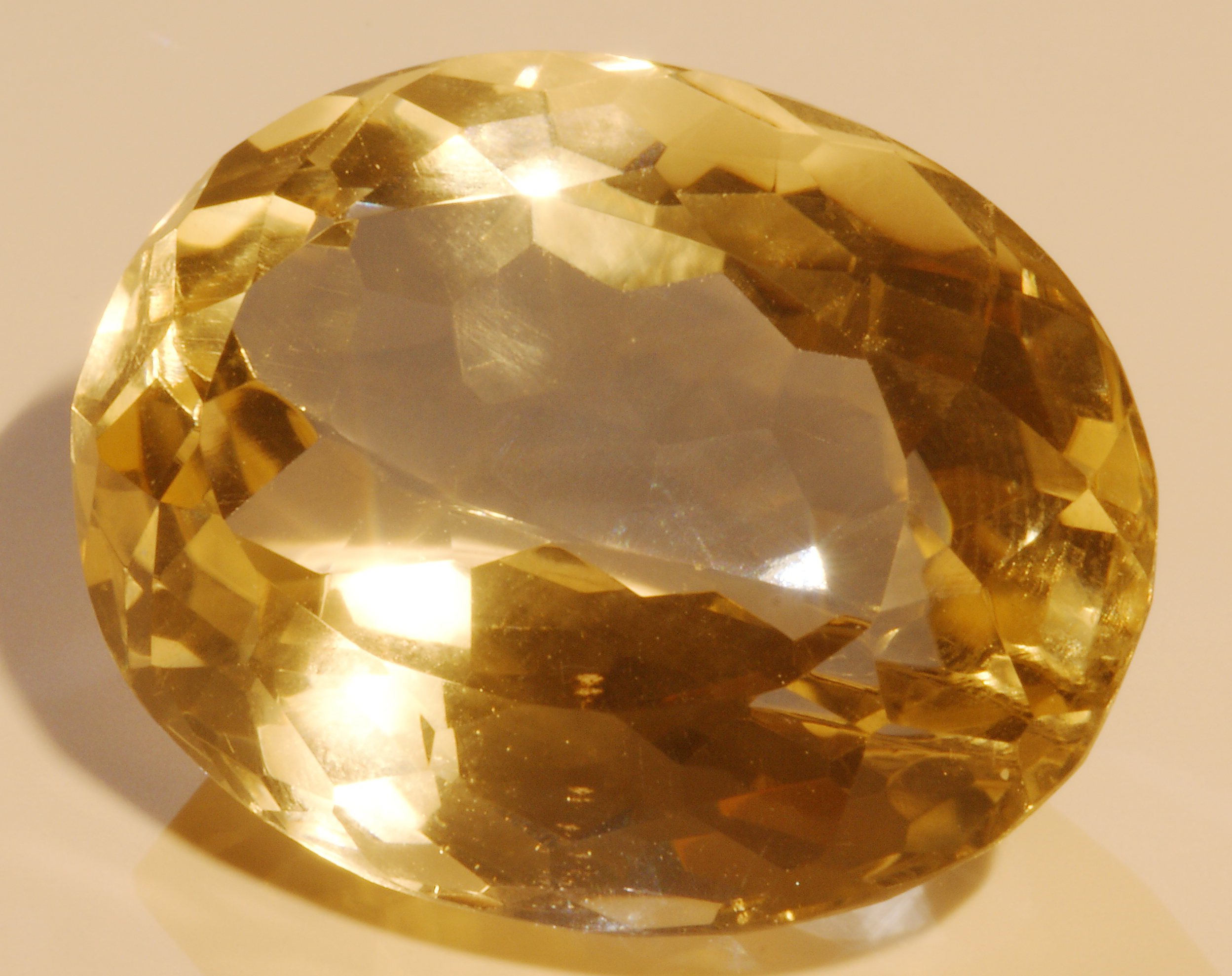
Faceted golden-yellow quartz from Brazil.

Citrine

Faceted golden-yellow quartz from Brazil.

VenusTraditional gem
Diamond

Diamond is crystalline carbon. It is the traditional gem for Venus. Opal belongs to a different class of gem materials.

Name in the Indian gem trade Heera

Navratan alternativeOpal
Photograph of the alternative
Polished Australian opals show flashes of green and pink.

Opal

Polished Australian opals show flashes of green and pink.

SaturnTraditional gem
Blue sapphire

Blue sapphire is the blue variety of corundum. Amethyst is purple quartz. The two have different compositions and distinct places in the table.

Name in the Indian gem trade Neelam

Navratan alternativeAmethyst
Photograph of the alternative
An oval-cut purple amethyst from Brazil.

Amethyst

An oval-cut purple amethyst from Brazil.

RahuTraditional gem
Hessonite garnet

Hessonite is a variety of grossular garnet. Its colours range from warm honey and orange to cinnamon brown.

Name in the Indian gem trade Gomed
Navratan alternativeUnspecified in the source
KetuTraditional gem
Cat’s-eye chrysoberyl

The traditional cat’s-eye gem is chrysoberyl. As the polished stone turns in the light, a bright band seems to glide over its surface. Quartz can show this optical effect as well.

Name in the Indian gem trade Lehsunia

Navratan alternativeCat’s-eye quartz
Photograph of the alternative
A bright band of light crosses the polished quartz cabochon.

Cat’s-eye quartz

A bright band of light crosses the polished quartz cabochon.

The alternatives come from the Navratan article. For example, pearl is the traditional gem for the Moon, and the article gives moonstone as an alternative. Navratan